Archive for October, 2011

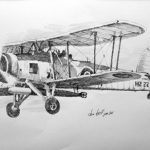
Image by Irene McCullagh
PROVISIONAL AIR SHOW PROGRAM AFB YSTERPLAAT WINGS & WHEELS SHOW 09 & 10 DECEMBER 2011
Air Show Helpline Number: 021 508 6414
- JET PROVOST FLYING DISPLAY
- L39 FLYING DISPLAY
- 2 X MX2 FLYING DISPLAY
- 4 X HARVARD FLYING DISPLAY
- P51 MUSTANG FLYING DISPLAY
- SEA FURY FLYING DISPLAY
- YAK 55 FLYING DISPLAY
- PITTS SPECIAL FLYING DISPLAY
- CRISTEN EAGLE FLYING DISPLAY
- BELL 47 FLYING DISPLAY
- GAZELLE FLYING DISPLAY
- BOSBOK FLYING DISPLAY
- 2 X RV73 (FORMATION) FLYING DISPLAY
- 2 X RV8 FLYING DISPLAY
- PREMIER JET FLYPAST & STATIC
- C172 FLYPAST & STATIC
- AC500 FLYPAST & STATIC
- PREMIER JET FLYPAST & STATIC
- PC12 FLYPAST & STATIC
- BARON FLYPAST & STATIC
- NAVY HARVARD POSSIBLE FLYING
- BOSBOK STATIC
- CHIPMUNK STATIC
- TIGER MOTH STATIC
- PIPER CUB STATIC
- SAVANAH STATIC
- HUGHES 269 STATIC
- HUEY STATIC
- GRASS HOPPER STATIC
- MAGNI GYRO STATIC
- SANKA HELICOPTER STATIC
- WILGA STATIC
- STEARMAN STATIC
- TITAN TORNADO STATIC
- VANSIN STATIC
- RAVEN STATIC
- JODEL STATIC
- CX4 STATIC
MILITARY DISPLAY FLYING
- GRIPEN
- HAWK
- C47TP
- SILVER FALCONS
- PILATUS PC7
- ORYX
- LYNX
- AUGUSTA A 109
- ROOIVALK
- C130
MILITARY STATIC PARK (SAAF MUSEUM)
MIRAGE IIIR2Z
PIAGGIO P166S
C47 (DC3)
HARVARD
SUPER FRELON
SIKORSKY S55
ALOUETTE III
SHACKLETON MKIII
40MM BOFORS ANTI AIRCRAFT GUN
VEHICLE DISPLAYS
CAPE TOWN CAR CLUB: BEST 300 CLASSIC & VINTAGE CARS
FRANSCHOEK MUSEUM: 30 VEHICLES (www.fmmm.co.za)
SUPER CARS
SPECIAL STAGE RALLY CARS
GYMKHANA
4X4 TRACK
|
1941 – 1945
|
|
|
1941
1942
1943
1944
1945
|
Brooklyn Air Station established on 24 October.
Hangers, buildings, railway siding, fuel installations and three runways constructed.
The first aircraft that landed on the newly constructed airfield was an Avro Anson.
First batch of aircraft assembled took off for flight tests on 19 January.
9 Air Depot, with WAAF members and RAF personnel, moved from Wingfield to Brooklyn on 20 January.
Wireless station with transmitting and receiving buildings constructed.
Camp facilities for Womens Auxiliary Air Force constructed.
The first Baltimore and Kittyhawks arrived from the docks.
6 Squadron relocated to Brooklyn in November.
Cape Fortress wireless transmitter station also relocated.
In March the 15 ferry and test pilots flew 1097 hours, ferrying and testing their quota of the 85 aircraft constructed.
Aircraft assembled: Anson, Oxford, Miles Master, Bristol Beaufort, Fairey Battle, Martin Baltimore, Dominie, Kittyhawk, Maryland, Harvard, Hurricanes.
Brooklyn Air Station handled up to 94 visiting aircraft, excluding training aircraft, in one month.
3 AD took over from 9 AD on 31 March. 11 AD continued as an independent sub unit.
The newly acquired Avro York for the use of Prime Minister Field Marshall Jan Smuts arrived at AFS Brooklyn.
The end of WWII with VE Day parade on 8 May.
|
|
1946 – 1959
|
|
|
1946
1947
1949
1950
1951
1953
1954
1955
1956
1957
1958
1959
|
300 Harvards crated at Brooklyn and shipped to the UK.
The first test flight of a Meteor III with pilot, Capt Meaker.
Venturas escorted the HMS Vanguard with the Royal family on board.
17 Squadron was officially opened with Major Stanford as OC.
RAF Commodore Atcherly and jet specialists arrive to prepare pilots for the Vampires.
Members selected to relief SAAF Squadron operating on the Berlin airlift.
Eleven pilots from Ysterplaat selected to join UN in Korea.
7 and 27 Active Citizen Force Squadrons was established.
Navigators School established with Major H.J.P. Burger, OC.
22 Squadron reformed at Ysterplaat under Major H.E. Kirby.
The last of 77 Vampires assembled.
First auto-rotation on the Sikorsky helicopter was done by Major Tatham and witnessed by the Media.
Three Sikorsky helicopters assembled.
AFS Ysterplaat was equipped with 15 Ventura, 3 Harvard and 1 Dakota aircraft. The Dakota was used in the air bridge between Cape Town and Cairo.
22 Squadrons’ disbandment coincided with the arrival of 35 Squadron, newly equipped with Avro Shackletons.
Shackletons and Venturas took part in combined exercises with the SA Navy and British Navy.
Ysterplaat hosted an Air Show in November featuring a Comet, Sabre, Shackleton, Devons, Dakotas and helicopters.
|
|
1960 – 1967
|
|
|
1961
1962
1963
1964
1965
1966
1967 |
Air Show highlights – rocket installations of the Alouette II on display; a Sabre broke the sound barrier over Cape Town.
27 Squadron reformed as Coastal Reconnaissance Squadron equipped with Dakota aircraft.
2 Aircraft Maintenance Unit was founded.
Shackleton 1718 crashed into Stettynskloof mountains near Rawsonville and thirteen crew members died.
Air Show – the first Mirage III seen by the Cape Town public.
22 Squadron reformed as 22 Flight with 6 Wasp helicopters.
402 Air Field Maintenance Unit received unit status.
Sikorsky helicopters replaced with Alouette III.
108 Air Force Reserve Squadron established in PE under command of Ysterplaat.
110 Air Force Reserve Squadron established to supply air support to ground troops, commando’s and civilian forces.
35 Squadron assisted crew of a Buccaneer that had to abandon their aircraft over the Atlantic Ocean.
The first landing of a Wasp helicopter on Bouvet Island. Two Wasp helicopters accompanied a survey ship with a team of scientists to the island.
17 Squadron crews rescued 76 people from the SA Seafarer.
Wasp 82 crashed in the sea off Milnerton during an exercise and the crew was rescued. The Wasp was re-floated after a few hours and rebuilt.
The Acting State President, Mr. J.F.T. Naudé, presented the Officer’s Commanding of 7, 17, 27 and 35 squadrons with their Squadron’s Colours on 30 October.
|
|
1968 – 1972
|
|
|
1968
1969
1970
1971
1972
|
The status of Ysterplaat is upgraded from a Station to Air Force Base.
25 Squadron was reformed as a Dakota medium Transport Squadron under command of Cmdt A.J. Cooney.
16 Squadron was established and equipped with Alouette III helicopters under command of Cmdt G. Thom.
Helicopter Conversion Unit with Alouette II and III helicopters established under command of Major J.M. Oosthuizen.
The Maritime Operational Training Unit, tasked to train flight crew, was established in under command of Cmdt P.S. Marais.
16 Super Frelon helicopters were assembled.
27 Squadron Dakotas was replaced with Piaggio 166S Albatross. Albatross 881 to 889 was assembled.
7 Squadron, a training unit operating Harvard aircraft, moved from Youngsfield to Ysterplaat.
22 Flight flew humanitarian missions to Tulbach residents in September when the town was struck by an earthquake.
22 Flight on stand by with Maritime Task Force in April as the world waits for Apollo 13 to return to earth at alternative sites.
25 Squadron started operational flying tours at Rundu.
A new Decca Navigation System was officially opened by the Minister of Defence, Mr P.W. Botha.
A new Control Tower was constructed.
A memorial service was held in February commemorating the deaths of the crews of three Mercurius aircraft that crashed on Devil’s Peak in May 1971, and the four 22 Flight helicopter crew members who died in a Wasp helicopter accident near Luanda in November 1971.
|
|
1973 – 1980
|
|
|
1973
1974
1975
1976
1977
1978
1979
1980
|
Alouette II helicopters were withdrawn from service.
Six Wasp helicopters were assembled. The delivery of the seventh Wasp was cancelled in accordance with a United Nations decision to ban the sale of weapons to South Africa.
22 Flight won the light Aircraft Command’s First Helicopter competition held at AFB Bloemspruit.
Ysterplaat received their first three television sets.
Start of Operation Savannah in SWA (Namibia). In December three Dakotas flew to Windhoek, heralding the moving of 25 Squadron’s bush tours to Grootfontein.
LCpls Martell and Maree of 25 Squadron were the first females to qualify as telecommunications operators and Lt A. Horn is our first female Air Traffic Controller.
22 Flight was restored to full squadron status.
First Dakota sprayed a camouflage colour scheme.
A Super Frelon helicopter set an unofficial record with a non-stop flight from Ysterplaat to Swartkop in November.
The last Harvard took off from Ysterplaat.
SAAF recruited coloured personnel for the first time since World War II.
The Officer’s Club burnt down and the Cambridge Hotel in Milnerton was taken over in 1979 as the Officer’s Mess.
At a parade Cmdt J. Cloete accepted the Colours on behalf of 27 Squadron from the State President, Mr. B.J. Vorster.
35 Squadron awarded the Freedom of the City of Cape Town.
30 Squadron reformed under the command of Cmdt R. Dean and equipped with Pumas and Super Frelon helicopters.
|
|
1981 – 1991
|
|
|
1981
1982
1983
1984
1985
1986
1987
1988
1989
1990
1991
|
22 and 30 Squadron was involved in flood relief rescue when Laingsburg was worst hit following heavy unseasonable rains.
SAAF 62nd birthday flying displays of a Spitfire, Canberras, Buccaneers, Mirage F1 aircraft, Frelon and Puma helicopters.
27, 30 and 35 Squadrons was dispatched in an extensive search-and rescue operation along with naval vessels following the collision of the SAS President Kruger and SAS Tafelberg.
AFB Ysterplaat received the SAAF Operational Efficiency Award for Support Sections two years in a row.
Dakota 77 flies for the last time in yellow and black livery.
2 ASU become a depot to extend production capacity.
Shackletons perform a farewell formation over Cape Town.
A Russian Naval Task Force rounds the Cape in September and a Dakota and Albatross shadows the vessels.
505 Security Squadron was established in June.
Return of 30 Squadron personnel and Pumas from SANAE Base in Antarctica after a trip of two and a half months.
Visit by Commander-in-Chief of Republic of China Air Force.
First Dakota maritime paint scheme on display for the media.
Commando members of 110 Squadron died when their Cessna crashed in the mountains near Montagu.
Air Crash simulation in Goodwood involving 400 personnel of SAA, Eskom, SADF, Civil Aviation and City Tramways.
25 and 27 Squadron amalgamated with 35 Squadron.
Ysterplaat Squadrons took part in the rescue operation of 219 passengers from the stricken Oceanos.
|
|
1992 – 2002
|
|
|
1992
1993
1994
1996
1997
1998
1999
2000
2001
2002
|
11 Air Depot amalgamated with 2 Air Depot.
Ysterplaat won the Sword of Peace Award for the third consecutive year for exceptional humanitarian service.
A concrete wall was erected around the Base.
Puma helicopters airlifted 40 crew members from Riverplate.
South Africa becomes a fully fledged democracy and AFB Ysterplaat welcomes new members from the former Non – Statuary Forces.
Museum Shackleton Pelican 1716 crashed in the Western Sahara. All 19 members survive and were rescued.
35 Squadron was re-equipped with C47-TP and the last operations were flown by the piston engine Dakotas.
The last of 60 Pilatus Astra PC-7 aircraft was assembled.
Helicopters transported containers and supplies for the building of the SANAE IV base in Antarctic.
Oryx helicopters arrive and J-type Pumas phased out.
A Delville Bush Memorial Service was held at Cape Town Gardens.
22 Squadron helicopters were deployed for fire-fighting in the Boland, Somerset West, Tulbach and Uniondale.
Air Show held in October in conjunction with Thunder City.
The new millennium kicks off with the biggest fires yet and are followed by floods in Mozambique.
Plans to close down AFB Ysterplaat and move lodger units to Cape Town International Airport abandoned.
Exhibition at Museum commemorating the 60th Anniversary of North African campaign opened by General E. Schmidt.
|
|
2003 – 2011
|
|
|
2003
2004
2005
2006
2007
2008
2009
2010
2011
|
22 Squadron flight crews awarded for the rescue of 89 people off the ice-bound Magdalena Oldendorff in the Antarctic.
Five members of 35 Squadron were selected for the SANDF Rugby team tour to Holland and Germany.
80 Air Navigation School received the Best Training Unit Prestige Award, Gold.
35 Squadron received the Golden award for the best Permanent Flying Unit and the Aviation Safety Award.
The first new generation Gripen fighter made its public debut in September and on the eve of the African Aerospace and Defence Expo hosted at Ysterplaat.
The Museum Shackleton, 1722, performs its last flight on 29th of March.
The first two Lynx helicopters arrive at Ysterplaat in July.
35 Squadron foils a drug drop by a foreign vessel.
Ysterplaat members involved in UN operations outside our borders in conjunction with SANDF and international forces.
AAD Air Show with 200 exhibitors from 30 countries. Some of the aircraft participating was Gripen, Hawk, Lightning and Hawker Hunter, Rooivalk-, Oryx- and Lynx helicopters.
AFB Ysterplaat was awarded the Freedom of Entry to the City of Cape Town. The official scroll was handed over to Colonel Cowan on a parade in August 2010.
AFB Ysterplaat was a hive of activity with the FIFA 2010 World Soccer Cup, when the SAAF secured the air space above Cape Town.
The USAF participated in another international AAD Air Show.
Ysterplaat Air Force Base celebrates its 70th birthday.
|
HISTORY AND LOCATION OF
AFB YSTERPLAAT PART II
The History of Ysterplaat 1810 – 1941 (The Early Years)
To a certain extent it is not known precisely when aviators started using Ysterplaat as a landing field, but it is interesting to know some of the background to what we know as Air Force Base Ysterplaat today.
In the census of 1810, it is listed that on the 31st December 1810, one Willem Caesar and the widow Priem and her two children are resident at d`Yzere Plaat, (Ysterplaat) a hay farm belonging to a Mr. J. P. Eksteen and that they owned two draft oxen.

Sir De Villiers Graaff in 1941 as a Major in the “Dukes”
Some time later as Cape Town expanded, the area then became known as Maitland Common and according to the Title Deeds for AFB Ysterplaat, that some of the property eventually belonged to Sir de Villiers Graaf.
An initiative by the Cape Town City Council to provide a municipal airport for the town led to what we know today as Air Force Base Ysterplaat. The name of the farm, and subsequently the name of the Base are named after the natural geographical feature of the ground and are translated into English as “Iron Plate”.

The Airport Manager's House
Erected in 1917 and occupied by Mr. F. A. N. Duk who worked for Aero Services as a pilot and manager of the Airport. The building is now occupied by AFB Ysterplaat Transport Section. Some of the exterior and interior areas have been slightly modernised, however, the fireplace and all original woodworks are perfectly preserved. Next to it was erected the 1920 Hangar that was subsequently moved to the museum.

Captain Fred Duk in the SAAF Special Reserve Force in 1923
In those early days, Brooklyn consisted of one house, (manager’s office) a lean-to Hangar (Museum Restoration Center) the 1920 Hangar and a large square grass airfield without runways.

Members of SAAF Diamond Mail Service at Brooklyn 1925
The Air Force’s association with the airfield did not begin in 1940 when the Base as we know it was being built. The SA Air Force’s relationship goes way back beyond that as the Air Force started what was then known as the SAAF Diamond Mail Service in 1925.
At the request of the Department of Mines, the SAAF instituted regular mail flights between Maitland and Alexander Bay. Cape Town would, it then appeared, have to become used to seeing SAAF aircraft in its skies.
It is suspected that from as early as 1915 civilian pilots were using the grass airfield that was to become known as AFS Brooklyn.
Union Airways, started by Major A.M. Miller of RFC fame, began operating a scheduled airmail service which used Brooklyn as its Cape Town terminus from 1927 for about two years before the operations were moved to Wingfield.
Union Airways did not survive the turbulence of the financial melt down in the 1920’s and several flying accidents did not contribute to its well being either and it was eventually liquidated leading to the formation of the nation’s national carrier.

South African Airways began flying on 1 February 1934 after the South African Government took over the assets and liabilities of Union Airways.

August 1929: Union Airways Gypsy Moths at Brooklyn
Union Airways was based upon a weekly service which left Cape Town after the arrival of the Union Castle Mail Ship on Monday mornings.
In the opposite direction, the fights were timed to reach Cape Town before the departure of the Mail Ships on their north-bound voyages. The service would unite Johannesburg, Bloemfontein, Port Elizabeth, East London and Durban with Cape Town.
The Miller Archives with the history of Union Airways is lodged with the permanent collection at the SAAF Museum.

The RMS Saxon Castle was the first ship to carry airmail collected in South Africa
The Pupil Pilot Training Scheme at Brooklyn
Although Brooklyn Aerodrome was first used in 1925 for military purposes, in 1938, the Chief Instructor of our then very young Air Force, Sergeant E.R. Mauritzi, chose Brooklyn as the most appropriate aerodrome in the Peninsula for training purposes. All flying training activities were then moved from Mariendal Aerodrome near Stellenbosch to the airfield at Brooklyn. And so the scheme to train 100 pilots for the SAAF began. It was known as Union Air Training Group (UTAG). Towards the end of 1938, African Air Transport (AAT), a subsidiary of De Havilland Aircraft Company at Baragwaneth opened up at Brooklyn, with a contract to train batches of civilian pilots to SA Air Force specified standards. The manager of AAT at that time was David Earl, the Pilot Instructors were Eddie Maritz, Jan Jacques, and later Victor smith who joined them in February 1939.

Victor Smith - an AAT flying instructor at Brooklyn Airport
Aircraft used were DH 82A Tiger Moths, ZS-ANE, AJC, ANU and AMZ. There were also the privately owned aeroplanes, a D.H. Hornet, ZS-AOT belonging to Victor Smith, and an Avro Avian owned by Traffic Cop Naude (later of Skeleton Coast fame). At this stage, Brooklyn still consisted of only one hangar, one office block come manager’s house and one lean-to hangar, no runways and no radio.
The course for the first batch of pupil pilots being trained for the SAAF started on 1 April 1939 and was to end on 30 June 1939. The course included: Wildsmith, Bob Kershaw, Fritz Johl, Victor Heimstra (who became a judge), Gordon Pat Patterson, Theo Purchase, Pat Polson, and Traffic Cops Naude and Strydom. Many pilots were trained without incident, a large number to become famous during World War 2, which started soon afterwards.

Bob Kershaw DSO, DFC
When war broke out in 1939, AAT was moved form Brooklyn to Tempe, near Bloemfontein, and was absorbed into the SAAF. Brooklyn was to be developed into a full blown Base.

On the first of September the SAAF held its second bi-annual air capability demonstration at Roodewal bombing range. After an early morning welcome briefing at AFB Waterkloof, invited VIP’s and guests were flown to Polokwane International Airport, and then driven by bus the further half hour to the site in the Limpopo province.
Further comprehensive briefings were held, covering recent SANDF operations, including simulated joint exercises involving members of the Executive National Security Programme (ENSP), the Army, Navy and Medical services. The slide shows and accompanying talks were extremely interesting and well presented, even covering the unexpected event of a Rooivalk having to be “rescued” from being snowed-in during a huminitarian exercise.
The Chief of the SAAF, Lieutenant-General Carlo Gagiano, gave the opening address and stated that the event was an ideal opportunity for the Air Force to promote itself, even in times of limited financial resources.
The display included SAAF’s fighter jets, the Gripen and Hawk, a selection of helicopters including the Rooivalk attack helicopters firing live rounds, BK 117 and Oryx and the spectacular dropping of 120 kg and 250kg bombs onto a target site called Charlie Coke.
Colonel Rama Iyer (Director Basic Flying Training SAAF) gave commentary on the bombing sequence, informing how increased technology has greatly increased accuracy in hitting a target.
To end the hour-long event, spectators were treated to tight 8-ship formation fly-pasts from both the Gripens and Hawks, as well as a sky-full of helicopters stretched across the horizon coming in in a most spectacular display.
After a well-organised lunch, guests were again returned by bus to the Polokwane airport for connecting flights to AFB Waterkloof. Indeed, everything ran very smoothly and professionally with excellent hospitality provided and it was an enormous privilege to attend this impressive “show of strength” event.
Royal Air Force Officers’ Club (RAFOC)
Lunch Friday 7 October
By Gordon Dyne
Members of RAFOC are reminded that this coming Friday 7 October sees the monthly ‘get together’ of many of the ‘crème de la crème’ members past and present from the SAAF, RAF, RRAF,SAA, SAS, French Foreign Legion and countless other military organisations.
The lunch will be held as usual at the graceful Wanderers Club in Johannesburg 12h00 for 13h00. After the usual splendid lunch accompanied by some fine wines from the Wanderers’ extensive cellars the Annual General Meeting will be held. It will be chaired by the present incumbent Bruce Harrison who will as usual bring some humour to the serious matter of electing a committee for 2011/2012.
Let us please have a record turnout for this yearly necessity.
Thank you.
For more information on RAFOC please refer to RAFOC’s web site http://www.rafoc.org/ .