Events List

Archive for January, 2011

The volunteers at the AFB Ysterplaat branch of the museum attended a full morning’s briefing by WO2 Mark Howell.

The Museum Volunteers were divided into two groups, and the briefings will be repeated on the last Saturday of each month. The session started at the Fire and Rescue Section’s briefing room, where WO2 Mark Howell provided an enjoyable presentation.

An old storage tank previously used to store Jet A-1 fuel was then the venue for the next session on operating in a smoke-filled building.

Our thanks to WO2 Mark Howell.

You too can become a volunteer. Join the Friends of the SAAF Museum.

Image by Sarel Wagner

The annual Air Force Day Parade took place on Friday 28 January 2011 at Swartkop.

The Air Force Day parade is held every year, on or near to the 1st February, which was the day the SAAF was established in 1920.

A Mystery Night at the Museum

Join the Friends of the SAAF Museum for an evening of fun and intrigue and
help us hunt for the ghost of the Museum.

Bring your family and friends along to help solve the mystery while also
learning about the colourful history of the South African Air Force. Teams
of three to four people will be tasked to find clues hidden in the Display
Hall and Hangars 1, 2 and 3.

All participants will be briefed while enjoying snacks and sherry before
embarking on the hunt. The hunt should last no longer than 1½ hours. After
all participants have completed the hunt, our famous Friends of the SAAF
Museum boerewors rolls will be served.

All teams that find the ghost of the Museum will be entered into a lucky
draw to win a mystery prize.

Venue: Swartkop Air Force Base

When: Friday, 4 March 2011

Time: 18:30 for 19:00

Cost: R100 per person

RSVP not later than 1 March 2011:

Wally 082 577 3611

Arthur 082 469 1395

Margaret 082 706 0057

Bank details: Absa

Account name: Friends of the SAAF Museum

Account number: 38106672030

Branch Code: 632005

Reference: Mystery Night

Hail the modest hero of the merciless Skeleton Coast!

In a retirement community in Potchefstroom a real South African hero died, almost unsung in his own country.

(BRENDAN SEERY February 1995,)

AT the age of 83 Immins Overbeek Naude succumbed to a double onslaught of asthma and angina. He probably wasn’t unhappy, because he had cheated death 52 years earlier in a hair-raising rescue bid that will rank as one of the most daring in history.

And while his heroism took place out of sight of the print and electronic media, he was, until his death, every bit as modest and taciturn about the whole thing as were the SAAF pilots who followed in his footsteps with the rescue of passengers from the sinking Oceanos. One of his fellow pilots in 23 Squadron of the South African Air Force, Durban pensioner Clyde Harley said: “What he did was courageous. He was a hero. We should remember”.

As commander of a B-34 Ventura bomber, Captain Naude risked his life and those of his three fellow-airmen in carrying out an unheard-of landing on the Skeleton Coast of Namibia to try to rescue survivors of the Dunedin Star, a ship which ran aground on November 29, 1942.

Captain Naude tried to drop water and food to the castaways, but, without parachutes, the containers split open and the precious contents were wasted.

He knew there were women, children and possibly badly injured sailors trapped on a beach between the cruel South Atlantic Ocean and the merciless Namib Desert.  No one would have faulted him if he had decided to return to the comfort of the officers’ mess at Rooikop in Walvis Bay. But, after a quick consultation with his crew he decided to attempt a landing, despite the very real dangers of cart-wheeling the 12-ton bomber in the soft dunes. The landing was without incident, but when Captain Naude tried to turn the Ventura around to prepare to take off, one of his wheels became bogged in the sand and he and his crew were suddenly castaways themselves.  The airmen joined up with the Dunedin Star survivors, who were suffering terrible privations in the baking heat and wind and sand.

It was to be another two weeks before Captain Naude and the airmen were rescued by a ground expedition which battled overland more than 1,000km from Windhoek, through some of the most inhospitable terrain on earth.
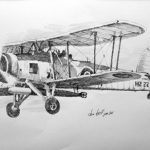
Other SAAF Venturas had managed to land at a better place further south on the coast and had flown some of the castaways out, while others were rescued by ships anchored off the wreck.  Captain Naude’s ordeal wasn’t over when he got back to Walvis Bay:  The SAAF wanted to know where its Ventura was.  He went back twice — nearly losing his life in a seaborne attempt wrecked by a fierce storm — to try to recover the plane. ‘

On the second trip, overland in early 1943.  Captain Naude took off successfully after SAAF mechanics made the aircraft fit to fly.  Only 20 minutes into his flight the Ventura lost power in one engine and plunged into the sea.

Lockheed PV-1 Ventura

Captain Naude and two mechanics survived and were washed ashore in the fuselage. But after drying their emergency rations and taking what little water they had, they marched 60km into the desert to meet the overland convoy which was returning after repairing the plane.

John Marsh, former Argus shipping reporter who described the Dunedin Star rescue in the 1944 book The Skeleton Coast, attended Immins Naude’s funeral and recalled that the pilot “never regarded himself as a hero, more as someone doing his job”.

Aviation historian Ivan Spring, who has compiled a history of Captain Naude’s squadron, said the old hero seemed to regard the rest of his life as “more of an adventure than the Dunedin Star episode”.

After leaving the SAAF following the incident —  he was discharged because of the effect the ordeal had on his health — Naude went on to hunt lion and leopard in Botswana and travel the length and breadth of southern and central Africa, including a three-month 15 000km trip from Cape Town to Zaire and the Mountains of the Moon in Uganda in the ’50s.  He described his adventures in detail in letters to Spring in the late ’80s, referring to his wartime role as “meagre”.

Fish Hoek pensioner “Planky” Wood, a pilot in 23 Squadron, hastily formed in 1942 to combat the nazi submarine threat around the Cape, said little fuss was made at the time of the Dunedin Star incident.  So little, in fact, that he had difficulty recalling details of the operation or of Immins Naude.

“We would have just looked upon it as part of the job, the job everybody has to do in wartime” added Wood.  In Durban Clyde Harley recalled that, at the time of the Dunedin Star incident he flew up the Skeleton Coast looking for survivors and also that the squadron’s other pilots said little about Immins Naude’s experience.

“It was as though we knew that there but for the grace of God go I, and it was a sobering thought.  Make no mistake, we would probably all have done the same thing. It was a war and there was a job to be done.”

Looking back with the benefit of 50-years’ hindsight, Harley said: “The man was a hero.”

(Thanks to assistance from Nick Elzinga)

Skeleton Coast by John H Marsh can be ordered from the Namibian Scientific Society.

(This article was first published on 24 September 2008, by Anne Lehmkuhl)

THE SAAF AND WARSAW

Earlier this month, I was blessed to attend a very special remembrance day – that for the brave young men of the South African Air Force who flew to the aid of Polish citizens in Warsaw during World War II. This article was written to help keep their memory alive. If you have further information on these men, please let me know and I will add it on.

For five years after Hitler’s invasion of Poland in 1939, Warsaw remained a Nazi-occupied city. Yet the underground Polish Home Army (AK) never stopped preparing for the day when it could rise against the Germans. This day arrived at 5pm on 01 August 1944 and for the next 63 days the men, women and children of the AK fought against the Germans. The AK believed the Russian Army would come to its aid, bit it didn’t. Within the first five days, the AK had re-taken most of the city, but without reinforcements and more arms and ammunition, they could not hold out. The Polish government in exile in Britain appealed to Winston Churchill for help.

The quickest way to help would be to drop supplies in, but the most direct route would take the Royal Air Force (RAF) over the most heavily defended parts of the Third Reich. Avoiding these areas would mean a round trip of 3520km. The only other alternative was over northern Italy but this too would involve avoiding most of the heavily defended German cities and a round trip of 3200km. Churchill was advised by his senior RAF officers that the task would achieve little militarily but cost high in life and equipment.

The 205 Group RAF at Foggia, Italy, was under the command of Major-General James (Jimmy) Thom DURRANT, a South African. The Group consisted of four Wings, three of which were RAF and the fourth was No. 2 Wing SAAF made up of 31 and 34 Squadrons equipped with Liberators.

On Sunday 13 August 1944, 10 crew of 31 Squadron were ordered to Brindisi for briefing and loading of special cargo. When they arrived in the Operations Room at Brindisi, they were greeted with a large wall map of Europe, marked with a thick black 3200 km route zig-zagging from Foggia to Warsaw. They were told that their mission was to fly at rooftop height over a heavily defended city and drop much-needed supplies. The flight route was long and zigzagged over a sea, high mountains and six enemy countries. Navigation aides were poor or non-existent, and the weather was usually foul. The four-engined Liberators would be heavily-laden. The supplies were packed in 12 canisters, each weighing 150 kg, on the bomb racks. Each canister was filled with light machine guns, ammunition, hand grenades, radio equipment, food and medical supplies. Each canister had a small parachute to break the fall. The first South African flight included Bob KLETTE (pilot), Lt. Alf FAUL (co-pilot), Lt. Bryan JONES (navigator), WO Eric WINCHESTER (radio operator), WO Herbert BROWN (air gunner), WO Henry UPTON (air gunner) and Smiler DAVIS.

There were 196 11-hour night flights from Brindisi and Foggia in Italy, to and from Warsaw from 04 August to early September. The aircraft crossed the Adriatic to occupied Yugoslavia before traversing Hungary, Czechoslovakia and the Carpathian mountains. The low altitudes flights dropped light machine guns, ammunition, medical supplies, radios and food. The pilots flew in almost every night. Along the way, anti-aircraft batteries and German night fighters made it difficult for the heavily-laden Liberators. The most dangerous part of the flight was when the bombers made the drops by flying at rooftop level and at near stalling speed. The aircraft and crew came from two South African Air Force (SAAF) squadrons, 31 and 34; two RAF squadrons, 148 and 178; US Air Force bombers; and the Polish Special Duties Flight 1586. The cost was high – 168 airmen are buried in the Allied Airmen’s cemetery in Krakow, southern Poland, all killed in the six weeks of the airlift. Eighty of the graves are of South Africans. Of the 80 aircraft involved, 31 were shot down – 17 during the weekend of 13-16 August. Sixty-nine South Africans never returned. Twenty-five SAAF Liberators were shot down. Fifty percent of the aircraft were
from the RAF, and 36% of the total force was South African. Squadron 31 had 28 Liberators in the Airlift, the largest component. Eight were lost, 25 reached Warsaw dropping 228 canisters – the highest number of any squadron involved. Squadron 34 had three aircraft involved, one of which was lost. Many aircraft were so damaged when they had to force-land. The price was high. Air Marshal Sir John Slessors, the Allied air commander in the Mediterranean, later put the losses at one bomber lost for every ton of supplies dropped.

The uprising was over by 02 October, when the remainder of the AK surrendered. Seventeen thousand members of the underground, 3500 Polish soldiers and 5000 civilians had been killed. Six months later, the war in Europe was over. A Soviet regime took over and the Warsaw Uprising disappeared from Polish history. Many AK leaders vanished into the gulag and prisons.

In 1992 the Polish ambassador in South Africa, Stanislaf Cieniuch, presented the Warsaw Insurrectionary Cross to the 61 South Africans who took part in the Airlift. The presentation was at a parade held at Voortrekkerhoogte. Descendants of 37 of these brave young men who died during the war or afterwards, received the medal on behalf of their family member. One hundred and twenty South African pilots and aircrew were part of the Airlift. In 1992, only 67 of them, of whom 28 were still alive, could be traced. The Polish government in exile, already in 1945, wanted to honour the South Africans and others who helped. The South African government turned down the honour in 1945 and again in 1953, as it did not recognise the Polish government.

In South Africa, there were a number of Poles who had fought for the Allies and were invalided to South Africa to be treated for tuberculosis at Baragwanath Hospital. They formed the founding group of what became the South African Polish Association. In 1947, the first annual flypast and commemoration service commemorating the Warsaw Airlift was held at the Johannesburg Cenotaph. The Polish community in South Africa commemorated the Uprising and the Airlift every year with a Mass at the cathedral in Johannesburg, laying a wreath at the Cenotaph and holding a reception at the Polish Club. In 1981 the Katyn Memorial was erected at the James and Ethel Gray Park in Melrose, Johannesburg, and the annual commemoration moved there. The Uprising and Airlift, as well as the massacre of thousands of Polish professionals, intelligentsia, academics and military in the Katyn Forest in the spring of 1940, are commemorated here each year and organised by the South African Warsaw Flights Commemoration Organising Committee.

It was only in the 1980s that Poland saw some commemoration of the Uprising, when the memorial in Krasinski Square was erected. The bronze tableau shows a charge by the AK, and fighters disappearing into the sewers. It stands in the square which was Lieutenant BURGESS’ target drop zone on the night he won the DSO. A statue of a little boy in an oversized helmet with a carbine in his hands, pays tribute to the children who took part in defending their city. There is an Uprising Museum next door. In 1997 a plaque was unveiled at Okecie Airport in memory of the South Africans. A replica is in the SAAF Museum at Swartkop. There are seven memorials in Poland where Allied aircraft that took part in the Airlift were shot down.

Bronislaw Kowalski, on his own initiative and over a number of years, erected a shrine in the forest near the village of Michalin. The shrine marks the spot where a SAAF Liberator crashed on 14/15 August 1944. It honours the memory of Second Lieutenant R.G. (Bob) HAMILTON, and Sergeants Leslie MAYES and Herbert HUDSON. In his garden, Bronislaw built another shrine in which a light burns day and night and has done so for many years.

THE SAAF CREW

1) Captain Leonard Charles ALLEN
Pilot, 31 Squadron, SAAF
Service no. 203161V
Died 17 Aug 1944, age 27
Buried at Krakow Rakowicki Cemetery
Estate file: MHG 4112/45, dated 1944 in the Transvaal. Son of Charles Edward ALLEN (died 1941, Transvaal, Estate file: MHG 1455/41) and Louisa/Louise Sophia/Sofia ALLEN (maiden name ZEEDERBURG, died in 1936, Transvaal, Estate file: MHG 95119).

2) Lieutenant Peter Herbert ANDREWS
Pilot, 31 Squadron, SAAF
Service no. 542624V
Died 15 Aug 1944, age 20
Buried at Krakow Rakowicki Cemetery
Estate file: MHG 5498/45, dated 1944 in the Transvaal. Son of Herbert William ANDREWS (died 1940, Transvaal, Estate file: MHG 3115/40) and Frances Emily ANDREWS (maiden name BURRIDGE).

3) Lieutenant John Christopher BRANCH-CLARK
Observer, 31 Squadron, SAAF
Service no. 543022V
Died 15 Aug 1944, age 18
Buried at Krakow Rakowicki Cemetery
Estate file: MOOC Vol. no. 6/9/12312 Ref. 1921/45, dated 1945 in the Cape Province. Son of Frank and Joan M. BRANCH-CLARK of Plumstead, Cape Town.

4) Warrant Officer (Class I) Douwe Brandsma BRANDSMA
Weapons Operator / Air Gunner, 31 Squadron, SAAF
Service no. 206784V
Died 17 Aug 1944, age 21 or 24
Buried at Krakow Rakowicki Cemetery
Estate file: MSCE 2052/1945, dated 1944-1946 in Natal. Son of Jacobus Gerhardus Johannes BRANDSMA (born in the OFS, died 1954, Pietermaritzburg, Estate file: MSCE 828/1954) and Martha Ann BRANDSMA (maiden name HOMAN, born in Ficksburg, OFS, died 1966, Pietermaritzburg, Estate file: MSCE 4122/1966).

5) Warrant Officer (Class II) Herbert James BROWN
31 Squadron, SAAF
Service no. 328832V
Died 17 Aug 1944, age 19
Buried at Malta
Estate file: MHG 3412/49, dated 1944 in the Transvaal. Son of James BROWN and Edith Sabine BROWN (died 1965, Transvaal, Estate file: MHG 790/1965) of Pretoria.

6) Lieutenant Oliver COLEMAN
Observer, 31 Squadron, SAAF
Service no. 328600V
Died 17 Aug 1944, age 20
Buried at Krakow Rakowicki Cemetery
Estate file: MHG 38211, dated 1945 in the Orange Free State. Son of Oliver Joseph Raymond COLEMAN (died 1934, OFS) and Angela COLEMAN (maiden name EGAN) of Bloemfontein. Angela’s second marriage was to a RICHARDSON. She died in 1972, Estate file: MHG 4788/72, dated 1972 in the Transvaal.

7) Lieutenant Cedric Arthur COOKE
Navigator, 31 Squadron, SAAF
Service no. 206267V
Died 15 Aug 1944, age 30
Buried at Krakow Rakowicki Cemetery
Estate file: MHG 4888/45, dated 1944 in the Transvaal
Buried at Krakow Rakowicki Cemetery

Son of Arthur Vernon COOKE (died 1945, Cape, Estate file: MOOC Vol. no. 6/9/12342 Ref. 2147/45) and Helen Isabel COOKE (died Jun 1955, Cape, Estate file: MOOC Vol. no. 6/9/23625 Ref. 2799/55) of Knysna.

Lieutenant percy Gordon COUTTS
Navigator / Bomber, 178 RAF Squadron
Service no. 329180V
Died 14 Aug 1944
Buried at Krakow Rakowicki Cemetery
Estate file: MSCE 2129/1945, dated 1944-1948 in Natal. Husband of Sophia Otilie Konstanz Paula COUTTS.

9) Lieutenant Denis Osborne CULLINGWORTH
Pilot, 34 Squadron, SAAF
Service no. 35379V
Died 16 Oct 1944, age 27
Buried at Krakow Rakowicki Cemetery
Estate file: MHG 5193/45, dated 1944 in the Transvaal. Son of William Walter CULLINGWORTH (died 1944, Pretoria, Estate file: MHG 4738/55) and Constance Ellen CULLINGWORTH (maiden name FISHER, died 1974, Transvaal, Estate file: MHG 4525/74). Husband of Elena Anna CULLINGWORTH (maiden name MEKISICH) of Pretoria.

10) Captain Eric Arnold ENDLER
Pilot, 34 Squadron, SAAF
Service no. 102379V
Died 11 Sept 1944
Buried at Belgrade War Cemetery
Estate file: MOOC Vol. no. 6/9/12251, Ref. 1523/45, dated 1945 in the Cape Province.

11) Warrant Officer (Class I) J.B. ERASMUS
Weapons Operator / Air Gunner, 31 Squadron, SAAF
Service no. 328250V
Died 17 Aug 1944, age 23 or 28
Buried at Krakow Rakowicki Cemetery
Son of Johann and Johanna C. ERASMUS of Swellendam.

12) Lieutenant Keith FAIRWEATHER
Navigator, 178 RAF Squadron
Service no. 542974V
Died 15 Aug 1944
Buried at Krakow Rakowicki Cemetery
Estate file: MHG 38146, dated 1944 in the OFS. Son of Alexander FAIRWEATHER (died 1942, OFS, Estate file: MHG 34254) and Margaret C. FAIRWEATHER of Kroonstad.

13) Lieutenant Charles Searle Stuart FRANKLIN
Pilot, 34 Squadron, SAAF
Service no. 206256V
Died 16 Oct 1944
Buried at Krakow Rakowicki Cemetery
Estate file: MOOC Vol. no. 6/9/12312, Ref. 1923/45, dated 1945 in the Cape Province. Husband of Francis FRANKLIN (later STOCK) of Great Brak River.

14) Second Lieutenant Robert George HAMILTON
Pilot, 31 Squadron, SAAF
Service no. 542957V
Died 15 Aug 1944
Buried at Krakow Rakowicki Cemetery
Estate file: MHG 1239/45, dated 1944 in the Transvaal.

15) Lieutenant Arthur James HASTINGS
Weapons Operator / Air Gunner, 31 Squadron, SAAF
Service no. 99671V
Died 17 Aug 1944, age 23
Buried at Krakow Rakowicki Cemetery
Estate file: MOOC Vol. no. 6/9/12248 Ref. 1505/45, dated 1945 in the Cape Province, and MHG 4387/45, dated 1945 in the Transvaal. Son of Mrs. L. MOODY of Grabouw.

16) Lieutenant Grattan Chesney HOOEY
Pilot, 31 Squadron, SAAF
Service no. 103846V
Died 15 Aug 1944, age 25
Buried at Krakow Rakowicki Cemetery
Estate file: MHG 5297/45, dated 1945 in the Transvaal. Son of Samuel HOOEY (died 1944, Transvaal, Estate file: MHG 4203/44) and Adela Sarah HOOEY (maiden name RICHARDS) of 201 Joubert Street, Volksrust.

17) Lieutenant Eric Ben Horton IMPEY
Observer, 31 Squadron, SAAF
Service no. 41252V
Died 17 Aug 1944, age 25
Buried at Krakow Rakowicki Cemetery
Estate file: MOOC Vol. no. 6/9/12312 Ref. 1926/45
Son of Ben Horton IMPEY and Hilda F. IMPEY of Cape Town. After packing his personal belongings, he sat down and wrote the Airman’s Prayer before going out to Warsaw never to return. He was the reigning South African high jump champion.

18) Lieutenant Walter KLOKOW
Observer, 31 Squadron, SAAF
Service no. 109210V
Died 17 Aug 1944, age 27
Buried at Krakow Rakowicki Cemetery
Estate file: MOOC Vol. no. 6/9/12309 Ref. 1902/45, dated 1945 in the Cape Province. Son of Lourens Cornelius GREYVENSTEYN and Anna C. GREYVENSTEYN of Molteno, Cape Province.

19) Lieutenant Ray Arras LAVERY
Pilot, 31 Squadron, SAAF
Service no. 329117V
Died 15 Aug 1944, age 25
Buried at Krakow Rakowicki Cemetery
Estate file: MOOC Vol. no. 6/9/12312 Ref. 1928/45, dated 1945 in the Cape Province. Son of James LAVERY and Edna B. LAVERY of Port Elizabeth.

20) Captain Gordon LAWRIE
Pilot, 31 Squadron, SAAF
Service no. 102792V
Died 17 Aug 1944, age 27
Buried at Krakow Rakowicki Cemetery
Estate file: MHG 5990/45, dated 1944 in the Transvaal. Son of David Knox LAWRIE (died Jun 1956, Cape, Estate file: MOOC Vol. no. 6/9/24029 Ref. 3165/56) and Amy I. LAWRIE. Husband of Isabella Frances Travers LAWRIE (maiden name ALTSON).
At Lysa Gora, in a clearing in the forest, there is a neatly kept grave surrounded by a wrought iron railing. The tombstone bears the names of Capt. Gordon LAURIE and his crew who were shot down there. The nearby primary school twice a year weeds the area and plants new flowers, while hearing the story of the men from a far-off country who helped Poland.

21) Lieutenant Ralph Lawrence LAWSON
Pilot, 178 RAF Squadron
Service no. 328846V
Died 15 Aug 1944, age 21
Buried at Krakow Rakowicki Cemetery
Estate file: MOOC Vol. no. 6/9/12349 Ref. 2201/45, dated 1945 in the Cape Province. Son of Arthur John LAWSON (died Mar 1956, Cape, Estate file: MOOC Vol. no. 6/9/23941 Ref. 1307/56) and Millwood Grace LAWSON (maiden name LAWRENCE, died 1946, Cape, Estate file: MOOC Vol. no. 6/9/12769 Ref. 1418/46). Step-son of R. CLARK of Kalk Bay. Arthur and Millwood divorced in 1931, and Millwood married Mr. CLARK.

22) Lieutenant Herbert Henry LEWIS
31 Squadron, SAAF
Service no. 136470V
Died 17 Aug 1944, age 24
Buried at Krakow Rakowicki Cemetery
Estate file: MOOC Vol. no. 6/9/12290 Ref. 1767/45, dated 1945 in the Cape Province. Son of Herbert Benjamin LEWIS (died 1957, Cape, Estate file: MOG Vol. no. 1/1/12 Ref. 226/57) and Ellen J.D. LEWIS of Middleton, Cape. Husband of Beatrice J. LEWIS.

23) Lieutenant James Arthur LITHGOW
Pilot, 34 Squadron, SAAF
Service no. 79528V
Awards: D.F.C.
Died 16 Oct 1944, age 23
Buried at Krakow Rakowicki Cemetery
Estate file: MHG 5262/45, dated 1944 in the Transvaal. Son of James Barclay LITHGOW (born in Scotland, died 1957, Natal, Estate file: MSCE 2290/1957) and Violet Bridget LITHGOW (maiden name FRASER, died 1961, Johannesburg, Estate file: MHG 3067/61).

24) Lieutenant Bernard Thomas LOXTON
Observer, 31 Squadron, SAAF
Service no. 329109V
Died 17 Aug 1944
Buried at Krakow Rakowicki Cemetery
Estate file: MSCE 2009/1945, dated 1944-1946 in Natal. Husband of Leonore Alice Helen LOXTON.

25) Lieutenant Keith Brennand MACWILLIAM
Pilot, 34 Squadron, SAAF
Service no. 117609V
Died 16 Oct 1944
Buried at Krakow Rakowicki Cemetery
Estate file: MHG 6657/45, dated 1944 in the Transvaal. Husband of Elizabeth MACWILLIAM (maiden name RISSIK).

26) Lieutenant Harry Allpress Ruston MALE
Weapons Operator / Air Gunner, 31 Squadron, SAAF
Service no. 21586V
Died 15 Aug 1944
Buried at Krakow Rakowicki Cemetery
Estate file: MHG 38378, dated 1945 in the OFS. Son of Harry John MALE (born in the UK, died 1966, Natal, Estate file: MSCE 727/1966) and Emily Anna MALE (maiden name RUSTON, born in England, died 1970, Natal, Estate file: MSCE 4954/1970) of Port Shepstone.

27) Lieutenant Allan Graham McCABE
Air Gunner, 34 Squadron, SAAF
Service no. 209194V
Died 11 Sept 1944, age 22
Buried at Belgrade War Cemetery
Estate file: MOOC Vol. no. 6/9/12267 Ref. 1617/45, dated 1945 in the Cape Province. Son of Frederick Liesching McCABE (died 1926, Cape, Estate file: MOOC Vol. no. 6/9/3015 Ref. 12342) and Kathleen L. McCABE of Graaff-Reinet.

28) Lieutenant Allan John McINNES
Pilot, 31 Squadron, SAAF
Service no. 157105V
Died 17 Aug 1944, age 22
Buried at Krakow Rakowicki Cemetery
Estate file: MOOC Vol. no. 6/9/12290 Ref. 1768/45, dated 1945 in the Cape Province. Son of Allan McINNES and Ethel May McINNES (maiden name BARROW, died 1953, Cape, Estate file: MOOC Vol. no. 6/9/21940, Ref. 6961/53) of Cape Town.

29) Lieutenant Kenneth James McLEOD
Observer, 34 Squadron, SAAF
Service no. 47943V
Died 16 Oct 1944, age 27
Buried at Krakow Rakowicki Cemetery
Estate file: MHG 5232/45, dated 1944 in the Transvaal. Son of George McLEOD and Johanna McLEOD of Kestell, OFS.

30) Warrant Officer (Class II) Joseph Arnold MEYER
Air Gunner, 31 Squadron, SAAF
Service no. 543206V
Died 15 Aug 1944, age 21
Buried at Krakow Rakowicki Cemetery
Estate file: MHG 5233/45, dated 1944 in the Transvaal. Son of Adolf MEYER (died 1937, OFS, Estate file: MHG 28573) and Florence Augusta MEYER (maiden name LOMNITZ, died 1974, Transvaal, Estate file: MHG 3672/74) of Pretoria.

31) Lieutenant Anthony James MUNRO
Pilot, 31 Squadron, SAAF
Service no. 7011V
Died 17 Aug 1944, age 20
Buried at Krakow Rakowicki Cemetery
Estate file: MSCE 892/1946, dated 1944-1946 in Natal. Son of David Butler Bowman MUNRO (died 1970, Natal, Estate file: MSCE 912/1970) and Ellen Alice Queenie MUNRO (maiden name HUNT, born in Port Elizabeth, died 1968, Natal, Estate file: MSCE 2385/1968) of Doornkop, Natal.

32) Major Izak Johannes Meyer ODENDAAL
Pilot, 31 Squadron, SAAF
Service no. 202918V
Died 17 Aug 1944, age 28
Buried at Krakow Rakowicki Cemetery
Awards: Mentioned in Despatches
Estate file: MHG 1738/46, dated 1944 in the Transvaal. Son of Dirk Cornelius ODENDAAL and Catharina A. ODENDAAL of Harrismith.

33) Warrant Officer (Class I) Terence Desmond O’KEEFE
Weapons Operator / Air Gunner, 31 Squadron, SAAF
Service no. 328854V
Died 15 Aug 1944, age 20
Buried at Krakow Rakowicki Cemetery
Estate file: MOOC Vol. no. 6/9/12320 Ref. 2003/45, dated 1945 in the Cape Province. Son of Michael O’KEEFE and Jeanette Walterina O’KEEFE (died 1949, Cape, Estate file: MOOC Vol. no. 6/9/16141 Ref. 3118/49) of Cape Town.

34) Warrant Officer (Class I) Douglas John PALMER
Weapons Operator / Air Gunner, 31 Squadron, SAAF
Service no. 329040V
Died 17 Aug 1944, age 23
Buried at Krakow Rakowicki Cemetery
Estate file: MHG 4949/45, dated 1944 in the Transvaal. Son of John PALMER (died 1943, Transvaal, Estate file: MHG 3551/43) and Gladys PALMER (maiden name McINTOSH, died 1961, Transvaal, Estate file: MHG 721/61) of Pretoria.

35) Lieutenant Gordon Bruce PITT
Weapons Operator / Air Gunner, 31 Squadron, SAAF
Service no. 100685V
Died 15 Aug 1944, age 20
Buried at Krakow Rakowicki Cemetery
Estate file: MOOC Vol. no. 6/9/12313 Ref. 1931/45, dated 1945 in the Cape Province. Son of Alexander PITT and Mina G. PITT of Salisbury, Southern Rhodesia. His brother, Lieutenant William George Alexander PITT, pilot with 34 Squadron, SAAF, died 23 Nov 1944, age 33. Service no. 206450V. Buried at Budapest War Cemetery. Estate file: MOOC Vol. no. 6/9/12320, Ref. 2004/45, dated 1945 in the Cape Province.

36) Lieutenant George RAY-HOWETT
Weapons Operator / Air Gunner, 34 Squadron, SAAF
Service no. 337473V
Died 16 Oct 1944, age 30
Buried at Krakow Rakowicki Cemetery
Estate file: MHG 5349/45, dated 1944 in the Transvaal. Son of Herbert Arthur RAY-HOWETT (died 1949, Transvaal. Estate file: MHG 4740/49) and Frances Dorothy RAY-HOWETT (maiden name KNIPP, died 1972, Transvaal, Estate file: MHG 4847/72) of Johannesburg.

37) Warrant Officer (Class I) Reginald Walter STAFFORD
Air Gunner, 31 Squadron, SAAF
Service no. 206770V
Died 15 Aug 1944, age 26
Buried at Krakow Rakowicki Cemetery
Estate file: MOOC Vol. no. 6/9/12313, Ref. 1932/45, dated 1945 in the Cape Province. Son of Reginald John STAFFORD (died 1935, Cape, Estate file: MOOC Vol. no. 6/9/4699 Ref. 48406) and Louisa STAFFORD (maiden name HARVEY) of Cape Town. His parents divorced in 1935. Husband of Dorothy F. STAFFORD of Cape Town.

38) Warrant Officer (Class II) John Atholl Campbell STEEL
Air Gunner, 31 Squadron, SAAF
Service no. 543216V
Died 17 Aug 1944, age 18
Buried at Krakow Rakowicki Cemetery
Estate file: MHG 37986, dated 1945 in the OFS. Son of Robert John STEEL (died 1928, OFS, Estate file: MHG 21276) and Jane STEEL (maiden name CAMPBELL, born in Rogart, Scotland, died 1960, Natal, Estate file: MSCE 1235/1960) of Pietermaritzburg.

39) Lieutenant Brian Henry STEWART
2 Squadron, SAAF
Service no. 103573V
Died 11 Sept or 08 Oct 1944, age 24
Buried at Krakow Rakowicki Cemetery or Belgrade War Cemetery
Estate file: MHG 1368/45, dated 1944 in the Transvaal. Son of Vallance Meikle STEWART (died 1945, Transvaal, Estate file: MHG 2504/45) and Edith Annie STEWART (maiden name HORNING, died 1957, Transvaal, Estate file: MHG 1083/58) of Bremersdorp, Swaziland.

40) Lieutenant Alan D’Egville STOTT
Navigator, 178 Squadron, RAF
Service no. 542708V
Died 15 Aug 1944, age 24
Buried at Krakow Rakowicki Cemetery
Estate file: MOOC Vol. no. 6/9/12334 Ref. 2093/45, dated 1945 in the Cape Province. Son of Dr. William H. STOTT and H.A. STOTT.

41) Captain Nicolaas VAN RENSBURG
Pilot, 31 Squadron, SAAF
Service no. 102853V
Died 15 Aug 1944
Buried at Krakow Rakowicki Cemetery

42) Lieutenant Thomas Tennant WATSON
Weapons Operator / Air Gunner, 31 Squadron, SAAF
Service no. 205946V
Died 17 Aug 1944, age 21
Buried at Krakow Rakowicki Cemetery
Estate file: MOOC Vol. no. 6/9/12228 Ref. 1342/45, died 1945 in the Cape Province. Son of Thomas S.T. WATSON and Hendrina M.K. WATSON of Blanco, Cape Province.

43) Warrant Officer (Class II) Ben Nevis WOODS
Air Gunner, 31 Squadron, SAAF
Service no. 543513V
Died 15 Aug 1944, age 36
Buried at Krakow Rakowicki Cemetery
Estate file: MHG 4828/45, dated 1945 in the Transvaal. Son of Benjamin WOODS and Charlotte WOODS. Husband of Isobel Reid Ford WOODS (maiden name ANDERSON) of Minnigaff, Kirkcudbrightshire, Scotland.
Ben came to South Africa in 1939. He looked after the polo ponies of a South African jeweller. He joined the SAAF in February 1942. He attended 64 Air School in Bloemfontien. This was followed by 43 Air School in Port Alfred where he qualified as an Air Gunner on 31 July 1943. He was transferred to 31 Squadron in April/May 1944. Ben next went to 64 Operations Flight 1675 O.C.U in Lydda, Palestine. On 16 June 1944, he was transferred to Celone, Foggia, Italy. His aircraft, flown by Capt. Nicolaas VAN RENSBURG, was shot down and crashed at Goledzinow near Warsaw. All the crew died and were buried at the crash site. Four years later their remains were discovered and they were re-buried at Krakow Rakovicki Cemetery.

SURVIVED

Lieutenant William Frederick (Fred) AUSTIN
He joined the SAAF at age 17 as an Air Gunner, first with 17 Squadron and later with 34 Squadron. Died 21 June 2008. Married to Pat and had a son, Wayne.

Second Lieutenant Robert (Bob) BURGESS
Pilot, 34 Squadron, SAAF
Youngest and most junior SAAF officer to be awarded the DSO. On 31 Aug 1944 he was the co-pilot of a Liberator that was shot on the way back to Italy from a Warsaw flight. The pilot in command baled out. Bob, having never landed a Liberator on his own, ordered the crew to bale out. They refused, so he nursed the crippled aircraft, assisted by Sgt. Alan Bates (RAF – DFM, MBE) and Lt. Noel Sleed (DFC), until they crash-landed in a field, west of Kiev. Bob married Inez, an army nurse. They moved to the Brown & Annie Lawrence Retirement Home in Pinelands, Cape Town, July 2002. Inez passed away on 04 July 2007 and Bob on 14 July 2007. Their son and daughter immigrated to New Zealand. Bob’s son has kept his father’s scrapbooks, medals and other Air Force memorabilia.

Captain George Laurence COLEY. Lived at Blood River.

Lieutenant John R. COLMAN. Lived in Cape Town. Died 2007.

Smiler DAVIS

J. Pieter DU PREEZ. Awarded the DFC. Lived in Pretoria. Died 2007.

Lt. Alf FAUL. Pilot.

Major I.J.M. (Nick) GROENEWALD
He ordered his crew to jump after his Liberator was hit over Warsaw. While reaching for his parachute pack, the Liberator exploded. He managed to clip his parachute pack to his harness and opened it in time to land but suffered burns. At daybreak, he stumbled into a farmhouse and was taken to a secret hospital where Polish doctors repaired his face and arm burns with skin grafts. With false documents, he worked as a farm labourer before joining the AK. Russian troops found him and took him to Moscow where he was handed over to the British ambassador. Nick contacted his wife who, in the meantime, had been receiving a widow’s pension.

Lieutenant L.G. JACKSON. Lived in Cape Town.

Lieutenant Bryan JONES
Navigator, 31 Squadron, SAAF
Born 29 April. He was 17 when he joined the SAAF in 1942. Shot down over Warsaw in August 1944. His saving grace was hearing a voice telling him, twice, to put on his steel hat. He reached for it on the floor behind him, and put it on. His aircraft, piloted by Bob KLETTE, crashed nose first onto Warsaw airfield and he was knocked out, but all seven crew miraculously survived. They scattered in different directions before being captured. One of the gunners, Herbert BROWN, was mortally hit in the crossfire. Bryan made a promise that day that he would devote his life to God, in thanks for his life. After the war he held a number of senior managerial positions before becoming ordained as a pastor in the Rosebank Union Church. The prisoners were held at a local prison for about a week, before being taken to the Stalagluft POW camp, from where they could see Allied aircraft being shot down. The Russians finally occupied Warsaw in January 1945. The Germans released the South Africans much later. In 1994, Bryan and his wife flew to Poland with members of the Warsaw 44 Club. In 2001, Bryan and Col. Dirk NEL were invited to attend the concert in Atheneum Theatre, Warsaw, to rise funds for the refurbishment of the Michalin Monument. They were also made Honorary Members of the Robert Hamilton Boy Scout Troop.

Robert R. (Bob) KLETTE
Pilot
Attended Grey College. Flew through heavy anti-aircraft fire with three of the aircraft’s four engines hit. After dropping the cargo, he turned for home. The control panel was blank, all the gauges and instruments were broken. In the pitch dark night, he managed to make an emergency landing on a Warsaw airfield. The Germans took the crew prisoner. Died April 2001? in Somerset West.

Colonel Dirk Uys NEL
Commanding Officer of 31 Squadron during the Warsaw Uprising. Deemed too senior to fly in the Airlift. He was the youngest Colonel in the SADF history. He passed away at his home in Somerset West on 27 Dec 2008, age 91. He was born on 02 May 1917 and joined the military at age 19. Shortly after his 21st birthday, he was promoted to Lieutenant-Colonel. Initially he flew bombers with 24 Squadron. Two years later he joined 31 Squadron, one of the most successful Allied Forces squadrons. After WWII, he joined South African Airways (SAA) where he later became a Flight Commander and flew to the USA to bring back SAA’s first Boeings. While flying a SAA Lancaster from Johannesburg to London, Nel saved the day. Refuelling was done at Kano, but on this stop the refuellers made an error. While flying over the Atlantic Ocean, one of the engines became over-heated. Nel wanted to use the fire extinguishers, but found them empty. He brought the aircraft down to about 100 m above the sea, hoping the spray would help cool the engines. It helped and the rest of the flight over the ocean was flown in an up and down manner, until they landed safely in London. Forthis he was awarded a medal by the then Minister of Transport, Ben SCHOEMAN. Nel was married to Annette CONRADIE, a former flight attendant who later worked as a journalist for the Transvaler newspaper. They had a son and two daughters.

Dirk Uys NEL was a descendant of the famous Voortrekker UYS family that was involved in many battles.
His grandfather was Cornelius Lukas (nickname Bloustroom) UYS who was born in 1857 in the Utrecht district and died in 1941. Cornelius was a bittereinder in the Anglo-Boer War. He married Maria Magdalena SPIES (1864-1936). His sons served with Collins’ Scouts in South West Africa during WWI.
Cornelius was the son of Petrus Lafras (nickname Piet Hlobane) UYS born 1827 in the Humansdorp district, died 1879 at Hlobaneberg, Zululand, and his wife Maria Johanna VAN NIEKERK (1830-1870).
Piet Hlobane was the son of Petrus Lafras (nickname Piet Italeni) UYS born 1797 in Swellendam district, died 11 April 1838 at Italeni, Zululand, and his wife Alida Maria UYS (1799-1869). He was the Voortrekker leader whose son, Dirkie UYS born 1823, was also killed on 11 April 1838.
Piet Italeni was the son of Jacobus Johannes (nickname Koos Bybel) UYS born 1770 in Bredasdorp district, died July 1838 at Mlazirivier, and his wife Susanna Margaretha MOOLMAN (1777-1850).
Koos Bybel was the son of Cornelis Janse UYS born 1736 in Stellenbosch district. died 1811, and his wife Alida Maria SWART (1746-1811).
Cornelis was the son of Dirk Cornelisz UYS born circa 1698 in Leiden, Holland, died circa 1758 in Stellenbosch district, and his wife Dina Maria LE ROUX (1702-1740).
Dirk was the son of Cornelis Janszoon UYS born circa 1671 in Amsterdam, Holland, arrived in the Cape before 1700, died after 1714, married Dirkje Matthijse WESTERHOUT in Leiden.

Captain William E. (Bill) SENN
Awarded the DFC for flying a badly damaged Liberator from Warsaw to Foggia, while he was seriously wounded. His mid-upper gunner was also injured. The rudder controls were damaged, the elevator control partially cut, and the nose-wheel mechanism was hit. The tail gunner still managed to shoot out four searchlights. Capt, Senn ordered his crew to jump, the crew being unaware that he was hit. His parachute buckle had been shot away, so he knew he couldn’t jump.

Lieutenant Russel SEARLE
Died in May 1992. Lived in Great Brak River. Married to Dotsie SEARLE.

Lieutenant H.C.D. STEEL. Lived in Johannesburg.

Robert (Bob) STEELE
Pilot, SAAF. Died Aug 2007.

Warrant Officer Henry UPTON. Air Gunner.

Captain VAN DER SPUY

Major Jack VAN EYSSEN, DFC
In 1987 Jack visited Warsaw for the commemoration service at St Anna’s Cathedral, with his wife and Cmdt. Polla KRUGER, then commanding officer of 31 Squadron. He died in December 1999 at the age of 81, in Johannesburg, of cancer. He was made an Honorary Colonel of the disbanded 31 Squadron at Hoedspruit. He was the founding member of the SAAF Association’s Stilfontein branch, and a member of the Johannesburg branch since 1981.

Second Lieutenant L. Eric D. WINCHESTER
Radio Operator, 31 Squadron, SAAF
Eric joined the SA Army in 1940 at the age of 17 and was soon posted to East Africa. He wasn’t seeing much action and tried to join the RAF but was turned down because of poor eyesight. Two years later, he returned to South Africa where he eventually joined the RAF. He was posted to Cairo with 31 Squadron and was trained as an air gunner. Eric was in the first South African flight with Lt. KLETTE. During that flight, the aircraft lost height due to icing on the wing. A German night fighter flew beneath them without seeing them. Their cargo was to be dropped in the main square, but with 2 engines shot out and a fire in the under-carriage, the plane crashed landed. Eric was wounded in the head and arm. After the crew was captured, they were eventually taken by train to Frankfurt where he was held in solitary confinement for 3 weeks prior to his interrogation and being sent to a POW camp in Eastern Germany. When the Russians arrived, they kept him as a Russian prisoner. Eventually he escaped into the nearby forest. He spent three days in the forest and eventually crossed the Elbe River Elbe, arriving at an American camp. It was nine months since the flight to Warsaw. Eric wondered what had happened to his colleague who had been taken away in an ambulance after their capture. He looked for details and when he attended a memorial service in Johannesburg in 1950 he saw that his friend’s name was not listed. Fifty-four years later Eric finally found his friend’s grave at Krakow. It had the same name, but the wrong squadron and wrong date. Eric did not give up, and in 1999 the Polish Red Cross finally found the grave at Lodz. Eric became a Senator. Lived in Durban.

(Anne’s blog can be found at here.)

On December 21st, 1938, a strange fish was caught off the East London coast. Professor J. L. B. Smith was fascinated by this fish, identified as a Coelacanth. This fish was thought to have been extinct for over two hundred million years.

Excited at the possibility of obtaining a second specimen, he printed hundred’s of notices requesting information on the Coelacanth. Almost 14 years later he received a telegram informing him of the capture of another Coelacanth in the Comores Islands.

As it was December 24th, he found difficulty in arranging transport. In desperation he contacted the Prime Minister and persuaded him of the importance of the find.

The Prime Minister instructed the Chief of the Air Force to assist. In due course, a signal was received by the O.C. Natal to send an aircraft to Durban to collect Prof. Smith, and then to travel to the Comores ‘to fetch a fish.’

(l to r) Director of Fisheries, Mayotte, Mr E. Breton;
Capt. Eric Hunt; Prof. JLB Smith;Commandant Blaauw;
Captain Letley; Lt. Ralston; Cpl. van Niekerk; Lt. Bergh; Cpl. Brink.

At the time the paint scheme was silver, with dark blue anti-dazzle on the nose and engine cowlings. Her squadron code, strangely enough. was K-OD. The Air Force insignia at the time was an orange roundel with Springbok.

Dakota 6832 on arrival in Grahamstown (l to r)
Lt. Bergh; Cpl. Brink; Cpl. van Niekerk; Mrs Margaret Smith;
Commandant Blaau; Prof. JLB Smith; Capt. Letley; Lt. Ralston;
William Smith. The coelacanth is in the box in the foreground.
Prof Smith’s son, William Smith, well known for his
participation in the TV show “A Word or Two” and his educational program.

Dakota MkII (C47A-10-K) was built in Oklahoma City and allocated Serial Number 42-108863 by the U.S.A.A.F. In February 1944 she was placed on charge by the R.A.F. under Serial Number KG 4434.
In March 1944 she was transferred to the S.A.A.F. and received Serial Number 6832.
On being transferred to 28 Squadron she received the codes K-OD.

6832 is currently being restored.

A Catalina lands on Durban Bay – Picture courtesy Jeff Gaisford. The photograph is of Catalina FP257F which is being piloted by F/O Dick Lawson, and was supplied by the Bull family of Sydney, from the Service Records of the late F/Lt Jack Bull (Pilot of Catalina FP288G)

THE CATALINAS OF LAKE St LUCIA
By Jeff Gaisford
Jeff Gaisford is currently Media Officer for Ezemvelo KZN Wildlife. He has a deep interest in the flying doats which operated in Zululand and this led to the writing of this article. It first appeared in World Air News and is reprinted here with kind permission.

Lake St Lucia is one of the oldest game reserves in Africa, having been established in1895. It also lies within South Africa’s first World Heritage Site – the Greater St Lucia Wetland Park. It is the largest estuarine lake system in sub-Saharan Africa, it contains large numbers of hippos and crocodiles, and the 36 000 ha water body is an average of one metre deep. Today it is a prime eco-tourism destination – but 60 years ago it was the scene of some spectacular military aviation activity.

U-Boats

Admiral Karl Doenitz, Head of the German U-boat arm, in looking for new hunting grounds for his U-boats, sent two groups of them to hunt in Cape waters in early 1942, and also sent individual U-boats to the east coast of South Africa. The U-boats reaped a terrible harvest and operated virtually unopposed at first. The big 1600 ton, type IX U-boats had a sea-going range of over 25 000 miles, and were commanded by veteran skippers such as Bartels (U-197), Lassen (U-509) Luth, and Gesau, who all operated off the east coast at some stage, destroying much Allied shipping.

Ironically, the only known U-boat sinking in that area was that of Bartels’ U-197 sunk by Catalinas of 262 and 259 Squadron RAF south of Madagascar. The sinking of this U-boat was probably due to information gained from the breaking of the German ENIGMA codes. Access to these codes was one of the most jealously guarded of Allied secrets and enabled Allied High Command to eavesdrop on German operational radio messages throughout most of the war.

Establishing Catalina Operations

In the early 1940s the first Catalina squadrons of the Royal Air Force began anti-submarine operations off the Cape coast, flying mostly from Langebaan. As the U-boats moved eastwards so did the Catalinas, arriving eventually at their base at Congella in Durban Harbour. They quickly identified the need for a forward base and Lake St Lucia, with its large expanses of water, was chosen after a snap survey. On 1 December 1942 the first ground crews led by Flight Lieutenant S J Wood arrived on the Eastern Shores and built a standard pattern RAF sea-plane base at what is now known as Catalina Bay on the eastern shore. They dynamited the rocks on the sea-shore at Mission Rocks for concrete, and built strip roads connecting various installations at points along the adjoining dunes. To this day the blast marks are clearly visible at Mission Rocks.

A massive radar installation was also built on one of the higher dunes, called Mount Tabor by the local missionaries. The main bunker is still used today as a trails base by hikers in the area. The Officer’s mess and certain other installations were sited across the Lake at Charter’s Creek.

The first Catalinas of 262 Squadron arrived on 26 February 1942 and began using the St Lucia base as springboard for extended 20 – 24 hour patrols along the sea-lanes up to Madagascar and down to Durban.  These were mostly Catalina 1b aircraft. The flarepath, consisted of a double row of bomb-scows moored at intervals diagonally across Catalina Bay, each fitted with a lantern for use during night landings. Ivan Spring, in his book “Flying Boat” tells an amusing story of a Catalina coming in to land at the height of a storm one night in which some of the vital scows were sunk. One of the base staff hurried out in a launch and took up position where the main scow should have been and signalled to the incoming aircraft “I am a flare…I am a flare…”

Some of the U-boat skippers were more than willing to fight it out on the surface and more than once, a Catalina limped back to St Lucia trailing smoke and with shell-holes decorating its wing panels.

The base was ideal, being shielded from the sea by a rank of high, forested dunes. Operations from this tropical base were not without incident, in spite of the idyllic setting. One of the early clashes occurred when gunners decided that basking crocs made good targets for the .50 waist guns as they droned their way up the Lake. The local game warden was very soon banging on the base commander’s door!

A very long T jetty was also built for refuelling and “bombing up”. The last of the pilings of this structure were removed by the conservation authorities in the 1980s and the area became known as “The Old Jetty”. There is also still a slipway leading to a concrete apron probably used when hauling the various boats used at the base out for maintenance. Various other foundations and well points litter the area, but are mostly very overgrown.

Tragedy

On the night of 7 June 1943 Catalina E (FP 275) of 259 Squadron, piloted by Flight Lieutenant J A B Kennedy RAF, was returning from an operational flight and made its final approach from the south, coming in over very flat terrain of reed beds and meanders of the Lake itself. As the big flying-boat passed low towards what is now called Mitchell Island, for no apparent reason it suddenly stalled and plunged into the shallows, killing all but one of its crew. The survivor was Sgt N A Workman.  The aircraft was a total loss although the base staff did salvage certain parts from it. During these operations they sank several sections of concrete pipe into the mud to use as a base for a working platform alongside the wreck. 

These pipes were in later years usually all that could be seen of the crash site. The wreck was apparently also used as bombing target later, resulting in it being further broken up. As the years went by the wreck slowly disintegrated as exposure to the elements and salt water took its toll.

At the time of writing Lake St Lucia and its environs was in the grip of a growing drought and with the mouth of the system being closed by a natural sand bar, the level of the Lake had dropped to a metre below sea-level. As a result the great mudflat on which the stark and shattered remains of Catalina E lie was completely exposed.

I waded to the wreckage in the early 80s, in calf-deep water with two colleagues, wishing at every step that I could lift both feet out of the water. All around us grew thick mats of sea-grass in which lived hundreds of very large mud-crabs the size of dinner plates, and armed with fearsome pincers. As we walked, the matted sea-grass heaved and moved as these monsters scuttled out of our way. We retrieved an intact section of the tailplane that is now stored in the KZN Wildlife offices at St Lucia. 

Shortly after the fatal crash of “E”, in the dark before dawn of 25 June 1943, Catalina H (FP265) of 262 Squadron RAF, piloted by Flying Officer F N C White, took off in dead calm conditions for an extended patrol. All sea-planes require a degree of chop on the water in order to “unstick” and apparently the glassy calmness of the water contributed to subsequent. A launch, with Flying Officer Keely on board, also went out to create a bit of chop on the water.  The heavily laden Catalina ran the full length of the flarepath from the Eastern Shores towards Charters Creek and was seen to climb steeply, only to stall and plummet into the Lake  where it exploded. A young Zulu herd-boy, who later became a field ranger at St Lucia, witnessed the crash and told a colleague that the explosion lit up the entire south basin of the Lake. This account tallies with Keely’s eyewitness report of a terrific flash of red followed by an explosion. One crewman, Sgt Benjamin Lee, survived.

Navy divers recovered the bodies of the crew by blasting the sunken wreckage, but complained of zero visibility in the cold, muddy waters, having to work entirely by feel. The bodies of the crew were buried in the Stellawood Cemetery in Durban. This aircraft crashed into an unusually deep part of the Lake and its exact location is unknown today.

Part of the administrative section of 262 Squadron was located in the home of the Selley family in St Lucia village. They ran the Estuary Hotel, and their one son, the late Mr Jeff Selley, an army engineer on leave from North Africa, heard of the crash and took his small boat, propelled by a stuttering 2 candle-power Seagull engine, 22km up the St Lucia estuary in the dark and assisted the RAF at the scene.  He was told to be careful of anything that might look like a dustbin as it was probably an unexploded depth-charge!

Lake St Lucia has always been a bit fickle and its water levels are ever capricious. 262 Squadron had set up their base at a time of high levels and as time went on the Lake began to get shallower. A Catalina draws 3’6″ when afloat and as the Catalins were due to be replaced by bigger Sunderlands which drew about 5′, the RAF began to cast anxious eyes around for another operational base. 

The last Catalina flew off St Lucia on 13 October 1944. The RAF chose Lake Umsingazi at Richards Bay as an alternative and the squadron eventually relocated there in November 1944. British tongues could not master the Zulu Umsingazi and the base was called “Loch Richard”. By this time there were more than a few South Africans serving in 262 Squadron and it eventually was handed over to the SAAF to become 35 Squadron, later being equipped with Short Sunderland flying-boats.

There were two other flying-boat crashes, both at Lake Umsingazi. In 1945 Catalina JX 367 made a bad landing and crashed into the bush fringing the lake. A 35 Sqn SAAF Sunderland RB-N crashed and sank on the night of 1 November 1956 in bad weather. As a boy I saw the stripped  hull of this aircraft being winched out of the lake in about 1958. It was later allowed to slip back into the water where it apparently remains to this day.
The Catalina operations at St Lucia left an interesting legacy of artifacts on the Eastern Shores, and the shattered wreck of Catalina E will lie exposed on its mudflat until the rains come and the waters of the great Lake St Lucia once more rise to cover its corroding frames. The lost wreck of Catalina H remains an enigma and perhaps one day a fisherman will pull up part of it and establish its last resting place. As happened with a wing-float from the Sunderland, some enterprising young men waded out to the wreck of Catalina E in the 1960s and removed an undamaged wing float. This was shortened slightly and fitted with an outboard motor, making a reasonably respectable small ski-boat that was regularly taken out to sea at Cape Vidal and Maphelane where it eventually came to grief.
THE SUNDERLAND FLYING BOATS OF LAKE UMSINGAZI

By Jeff Gaisford
Jeff Gaisford is currently Media Officer for Ezemvelo KZN Wildlife. He has a deep interest in the flying doats which operated in Zululand and this led to the writing of this article. It first appeared in World Air News and is reprinted here with kind permission.

262 Squadron RAF used Catalina Bay at the southern end of Lake St Lucia as a forward operational base in 1943 and ‘44.  Initially they flew the sturdy Catalina flying boats, but these were gradually replaced by much larger four engined Short Sunderland Mark 5 flying boats. These drew over five foot of water and St Lucia was too shallow for them. This forced the Squadron to look for an alternative landing site with deeper water. They chose Lake Umsingazi at Richards Bay, and the squadron relocated there lock stock and barrel in the course of 1944.  In 1945, there being so many South Africans on strength in 262 Squadron, it was decided to transfer the whole operation to the South African Air Force. This was duly done and 35 Squadron SAAF came into being. The squadron base was at Congella in Durban and this required the big flying boats to land in the harbour. They were forbidden to land there at night, however, due to various after dark hazards that included the large number of small “fishing”craft, and the flying boats had to land at Lake Umsingazi.

A 35 Sqn SAAF Sunderland with the registration letters RB-N crashed and sank there on the night of 1 November 1956 in bad weather after a navigation exercise to Europa Island in the Mozambique Channel.

A young crewman, 18 year-old Henry van Reenen, survived the crash and, now a respectable businessman in Gauteng, recently told me his tale:
“Three Sunderlands flew on the navigation exercise from Durban to Europa Island – their serial numbers were RB-D and RB-N which was the aircraft I flew in. I cannot recall the registration of the third one. En route our radar set failed. Great waterspouts were rising all around us, forcing us to dodge backwards and forwards and it wasn’t long before our navigators had no idea where we were. Without radar we were almost blind.

The other two Sunderlands completed the exercise, turned for home and landed safely at Lake Umsingazi. We eventually packed it in in the late afternoon and headed back towards the South African coast. A thunderstorm had come up, waterspouts kept forcing us to change course, so we headed towards Durban and then turned up-coast in order to find our landing area on Lake Umsingazi.  Late that night we sighted the lights of the flarepath on Lake Umsingazi and came down on our final approach. The thunderstorm was still raging with high winds, very heavy rain, hail and great flashes of lightning that lit the sky around us.

The Sunderland was about 60 feet off the water when for no apparent reason we dropped onto the surface, hitting very hard. We bounced, then hit the water again. I fly privately now but in those days wind-shear was a little- understood factor.  Our pilot, Capt Naude, rammed the throttles open to abort the landing and go around once more, but at about 100 feet the Sunderland stalled under full power and crashed into the lake. The nose was partially broken off, the co-pilot Lt Col Thys Uys was flung bodily through the cockpit canopy and landed almost 200 yards away. Capt Naude’s harness snapped and he was flung back-first against the instrument panel, injuring his back. I was seated in the wardroom below the flight deck with three other crewmen and was catapulted against the bulkhead ahead of us and knocked unconscious. Two of these crewmen were the only fatalities. I came to a few minutes later underwater and in pitch darkness. I found some air trapped above me and, after taking a deep breath, swam back through the wardroom into the galley – there I opened a hatch that led to the flight deck, but this was also under water. There was a small perspex dome used by the navigator just aft the main canopy. I found some air trapped there and this gave me a few more gulps.
Acting more on instinct I swam along a passageway to the weapons deck intending to exit the Sunderland through one of two machine-gun hatches situated on either side of the fuselage just aft of the wing trailing edges. Some flame floats in this compartment had ignited and the interior of the compartment was aflame so I swam underneath the flames to get to the left hand hatch. The rest of the crew were sitting on the left hand wing and Jan Knoll, a Dutch radio officer, heard me yelling. He had been in the wardroom with us and had swum out through the galley and through the viciously sharp tangle of wreckage where the nose had been. He jumped into the water and helped me out, swimming with me to the wing where my friends pulled me up and out of the water. They battled to pull me up because a hook on my Mae West buoyancy jacket had caught on the wing trailing edge. All their pulling was pretty painful! I passed out from the pain of my injuries – I had broken both ankles – and only came to briefly on the boat taking us to shore.

We were given first aid and bundled into the back of 1947 Ford ambulance that bounced its way across a terribly rough track to the Empangeni Hospital. Both my feet were dangling off the end of the stretcher and were being mercilessly bounced up and down. One of the medics realised that I was in agony and they shifted me up a bit. At the hospital they cut off our flying suits and gave us another thorough wash! We were later flown to Durban and spent a few weeks recovering in Addington Hospital before being flown to Cape Town in another Sunderland,” he told me.

Richards Bay in those days was still very wild and the bodies of the two men who died in the crash were only recovered some days later because crocodiles were nosing around the wreck and keeping the divers away. Thys Uys was a bit of a legend in his own right having being involved in the attempted rescue of the survivors of a wrecked ship, the Dunedin Star, on the Namibian coast in 1939 flying a Ventura.
As a boy I saw the stripped  hull of the Sunderland being winched out of the Lake Msingazi in about 1958. Only recently have I found out that full salvage was not possible and the hull was let slip back into the lake.  A local man salvaged the right hand wing float at that time and converted it into a catamaran ski-boat powered by an old flathead Ford V8 engine and with one of those domed Perspex cake covers usually found in a Greek tearoom as a canopy. This contraption, looking like something from Startrek, actually went out to sea and must still be in the area somewhere!
The natural beauty of Lake St Lucia and Umsingazi has hidden this story for many years.
To the average visitor today the thought of those beautiful lakes being the scene of such amazing military aviation activity would be strange – but these events are a part of the fascinating history of Zululand and definitely part of the aviation history of South Africa.
Preliminary Year Planner 2011
Date Day Event
13th January Meeting
28th January Friday Airforce Day
3rd February Meeting
5th February Flying Training
12th/13th February SA  Model Jets
Night At The Museum
Thursday SAAF Museum Council Meeting
3rd March AGM and Braai
5th March Flying Training
2nd April Flying Training
7th April Meeting
22nd April Friday Public Holiday
25th April Monday Public Holiday
27th April Wednesday Public Holiday
5th May Meeting
7th May Flying Training
21st May SAAF Swartkop Air Extravaganza
SAAFA Silver Queen Air Race
SA Model Jets Masters
Thursday SAAF Museum Council Meeting
2nd June Meeting
4th June Flying Training
Warbirds Scale
16th June Thursday Public Holiday
2nd July Flying Training
2nd July N E C Conference
7th July Meeting
Swartkop Scale
4th August Meeting
6th August Flying Training
Thursday SAAF Museum Council Meeting
1st September Meeting – Spring Braai
3rd September Flying Training
1st October SAAF AFB Waterkloof Air Show
6th October Meeting
SA Model Jets Nationals
29th October Year End Function
3rd November Meeting
5th November Flying Training
Thursday SAAF Museum Council Meeting
1st December Meeting and Braai
3rd December Flying Training
9th/10th December Ysterplaat Wings and Wheels Show
10th December Champagne Breakfast
16th December Friday Public Holiday

Wasp #93 at AFB Ysterplaat

Wasp #93 and website author at AFB Ysterplaat in 2002. He served on the SAS President Kruger, which operated Wasp helicopters in an anti-submarine role.

SAS President Pretorius

Taken by the website author in 1981 from the helicopter deck of the SA Navy Flagship SAS President Kruger, SAS President Pretorius and WASP HAS. MK1 operate south of Cape Point.

Note the forefoot of the frigate is completely out of the water.

Wasp #85 operating off the SAS President Kruger in 1981

The first prototype flew in the UK in 1958, and the first production model flew in 1962. Developed as an antisubmarine ship-based unit, the aircraft carries a pilot and a flight engineer and three passengers. Armed with either two Mk 44 torpedoes or depth charges, this aircraft had a range of 488km and a maximum speed of 104 knots, or 193 km/h.

Powered by a Rolls Royce Bristol Nimbus 503 turbo shaft, the SAAF ordered 17 WASPs of which 16 were delivered.

Content Protected Using Blog Protector By: PcDrome.